Introduction
Many organisations struggle with disconnected content tools,juggling a CMS, separate analytics, push notification vendors, social distribution platforms, and a CDN. This fragmentation slows publishing workflows, inflates annual costs, and harms search visibility. Each tool adds overhead; every integration demands developer time.
Choosing the wrong DXP means higher maintenance costs, slower publishing cycles, and Core Web Vitals scores that drag down organic reach. This guide defines what a DXP is and identifies the selection factors that matter most for media, publishing, BFSI, and brand organisations,so you can shortlist with confidence.
Key Takeaways
- A DXP integrates creation, management, delivery, and optimisation across channels,going beyond a single-site CMS
- Priority selection factors: AI capabilities, total cost of ownership, integration flexibility, Core Web Vitals, and compliance readiness
- Fit matters more than features,evaluate against your real workflows, audience touchpoints, and multi-year costs
- Align stakeholders on goals, required capabilities, and existing tech stack before vendor shortlisting
- AI-first features, GEO discoverability, and usage-based pricing are meaningful differentiators, not optional extras
What Is a Digital Experience Platform (DXP)?
A DXP is an integrated suite of technologies designed for composition, management, delivery, and optimisation of contextualised digital experiences across multiple channels,distinct from a CMS, which manages content for a single website. Gartner sized the DXP market at USD 5.9 billion by 2028, reflecting accelerating enterprise investment.
Core Components of a DXP
Every DXP must deliver these functional layers:
- Content management system at its core, covering authoring, workflows, and storage
- Analytics and data collection to track engagement, attribution, and audience behaviour
- Personalisation and segmentation for targeted content delivery
- Multi-channel delivery across web, mobile, push, email, and social
- Integration APIs connecting CRM, DAM, marketing automation, and commerce systems
Modern DXPs increasingly include AI-powered capabilities,content generation, distribution automation, and performance intelligence,which Forrester describes as "agentic orchestration" and no longer premium add-ons. Forrester emphasises: "Agents are now the centre of the DXP. Not a feature. Not an add-on."
Why DXPs Matter for Media, Publishing, and Content-Driven Organisations
For news publishers, media houses, BFSI content teams, and brands, a DXP directly shapes publishing speed, audience engagement, and revenue potential, whether that's ad income or organic growth. The platform choice matters more than most teams expect upfront.
Fragmented tool stacks introduce compounding bottlenecks: integration maintenance, manual propagation across regions, and coordination overhead that grows with every new channel or market added.
CMSWire reports that Gartner found 85% of DXP programme effort and cost are spent on integrations, not platform features. The performance gap is equally consequential: sites meeting Core Web Vitals thresholds saw users 24% less likely to abandon a page load, directly linking technical performance to engagement and revenue.
Key Factors to Consider When Choosing a DXP
DXP selection varies significantly based on organisation type, content volume, audience expectations, and existing infrastructure,no single checklist applies universally. The following factors bridge technical specifications with measurable business outcomes, helping you move beyond feature demos to operational impact.
Business Goals and Audience Alignment
A DXP that doesn't directly support your content-led growth goals,increasing page views, driving subscriptions, enabling content monetisation,will underperform regardless of how feature-rich it is.
Evaluate whether the platform supports your publishing model (article-heavy, multimedia, multi-language, multi-site) and serves your audience across the channels they actually use. If you publish breaking news and depend on Google Discover, the platform must excel at discovery optimisation. If subscriptions drive revenue, paywall flexibility and user authentication matter more.
Content Management and AI Capabilities
Content velocity and quality are the primary metrics for most publishers and brands. Platforms that enable non-technical teams to create, repurpose, and publish faster directly reduce dependency on developer bandwidth.
AI-powered capabilities,content generation, automatic repurposing, AI-driven distribution, and GEO/AI search discoverability,are material differentiators. Ask vendors for specific metrics: how do AI features impact output speed, time-to-publish, and search performance? Ask for case studies or benchmark data, not slide-deck claims.
Core Web Vitals scores (LCP, CLS, INP) are a proxy for how well-engineered the underlying platform is. The Web Almanac 2025 reports that 48% of mobile pages pass all three Core Web Vitals, up from 44% in 2024. Google Search Central states that CWV and page experience "align with what our core ranking systems seek to reward",tying performance directly to organic traffic.
Total Cost of Ownership (TCO)
The licence or subscription fee is rarely the full cost picture. TCO should include:
- Implementation and migration labour
- Ongoing maintenance and developer hours
- Third-party tool dependencies (analytics, DAM, CDN)
- Infrastructure costs (if self-hosted or hybrid)
- Vendor-specific talent premiums
Usage-based billing models,as opposed to fixed enterprise licensing,can dramatically reduce costs for growing organisations by aligning spend to actual consumption rather than anticipated peak load. CMSWire highlights that hidden costs compound after selection: integration sprints, infrastructure burden, DevOps staffing, and unpredictable AI consumption costs.
Integration and Composability
Research consistently shows that the majority of DXP programme effort and cost sits in integrations,making connector quality as important as the platform core itself.
A DXP sitting in isolation is just a CMS; its value multiplies when it connects cleanly to CRM, analytics platforms (GA4, GSC), push notification systems, social distribution tools, and ad networks without custom development for each connection.
Look for:
- Pre-built connectors for your existing tools
- Open APIs (REST, GraphQL) for flexibility
- Clear integration roadmap from the vendor
Forrester identifies composable architecture as "the biggest trend and also biggest challenge" in DXP selection. Flag the risk of tightly coupled "closed" DXPs that make it expensive or impossible to swap individual components as needs evolve.
Security, Compliance, and Uptime
For regulated sectors (BFSI, healthcare) and publishers handling audience data, compliance certifications,WCAG accessibility, DPDP readiness, data encryption, and role-based access controls,are non-negotiable selection criteria. For BFSI organisations specifically, RBI and SEBI data localisation and audit trail requirements add additional layers to evaluate during vendor due diligence.
Platform uptime directly affects content availability, ad revenue, and reader trust. Atlassian cites Gartner at an average cost of $5,600 per minute of downtime, with high-traffic publishers and financial institutions exceeding $100,000 per hour during peak windows. Enterprise SLAs typically target four nines (99.99%) or higher; 99.995% equals approximately 26 minutes of downtime per year.
Evaluate vendor track records for uptime against this standard. Ask for public status pages, incident reports, and SLA credits for breaches.
Vendor Support and Scalability
Implementation quality and post-launch support determine whether a DXP delivers its promised value. Evaluate vendors on:
- Onboarding structure (dedicated project manager, training, documentation)
- SLA response times for critical, high, and medium-priority issues
- White-glove support availability at your tier (not premium-only)
Scalability is the ability to handle traffic spikes,breaking news, campaigns, product launches,without degradation. This is particularly critical for media organisations and BFSI institutions with unpredictable demand patterns. Ask for architecture details: auto-scaling thresholds, CDN integration, and stress-test benchmarks.
Questions to Ask Before You Shortlist a DXP
Before approaching vendors, internal alignment on a few core questions prevents scope creep and speeds up evaluation.
Work through this checklist before you open any vendor conversations:
- Who are the key stakeholders? Identify representatives from marketing, IT, content, and compliance, and agree on what success looks like at 12 and 36 months.
- What capabilities do we already have vs. what we need? Map your current tools (CMS, analytics, CDN, push notifications) and flag gaps or redundancies.
- What must the DXP integrate with on day one? Document required connections, identity providers, CRM, ad platforms, and any existing martech.
- What are our peak traffic and content volume projections for the next three years? Use this to size infrastructure requirements and pressure-test vendor pricing models.
Skipping this audit is costly. 85% of DXP programme spend goes to integrations, so organisations that evaluate platforms without mapping their existing stack often discover expensive gaps only after contracts are signed.
How Publive Can Help You Choose the Right DXP
Publive is an AI-first DXP built specifically for media houses, publishers, BFSI institutions, brands, and healthcare organisations. It consolidates tools, cuts operational costs, and accelerates content output within a single unified platform.
Key differentiators aligned to selection criteria:
- Cuts Total Cost of Ownership by 50% through all-in-one architecture and usage-based billing
- Delivers 60% faster content output via AI-powered generation, repurposing, and experimentation
- 98% of client sites pass Core Web Vitals,the highest rate among leading DXPs
- 99.995% uptime on AWS with enterprise-grade security and 24×7 white-glove support
- Real-time analytics through GA4 and GSC connectors with a Golden Signals Dashboard
- WCAG-compliant and DPDP-ready from day one, covering accessibility and data privacy requirements
- Built for AI search and GEO discoverability, so content stays findable as search evolves
Clients including Indian Express, News Nation, Kanak News, Sambad, Fino Payment Bank, and Dataquest trust Publive across media, publishing, and financial sectors. If your organisation is evaluating DXPs, Publive's team works alongside you through implementation,so the risk doesn't sit entirely on your side.
Conclusion
The best DXP is not the one with the longest feature list,it's the one that matches your team's actual workflows, your audience's channel preferences, your compliance requirements, and your cost structure over a multi-year horizon. Feature parity is easy to claim; operational fit is hard to fake.
DXP selection is the start of an ongoing relationship, not a one-time purchase. The platform you choose should enable continuous optimisation, not lock you into a fixed capability set. Each year, check whether your platform still covers three things: emerging integration gaps, shifts in your AI tooling requirements, and changes in how your audience discovers and consumes content. If the answer to any of those is "no longer a fit," the cost of switching only grows with time.
Frequently Asked Questions
What is the difference between a DXP and a CMS?
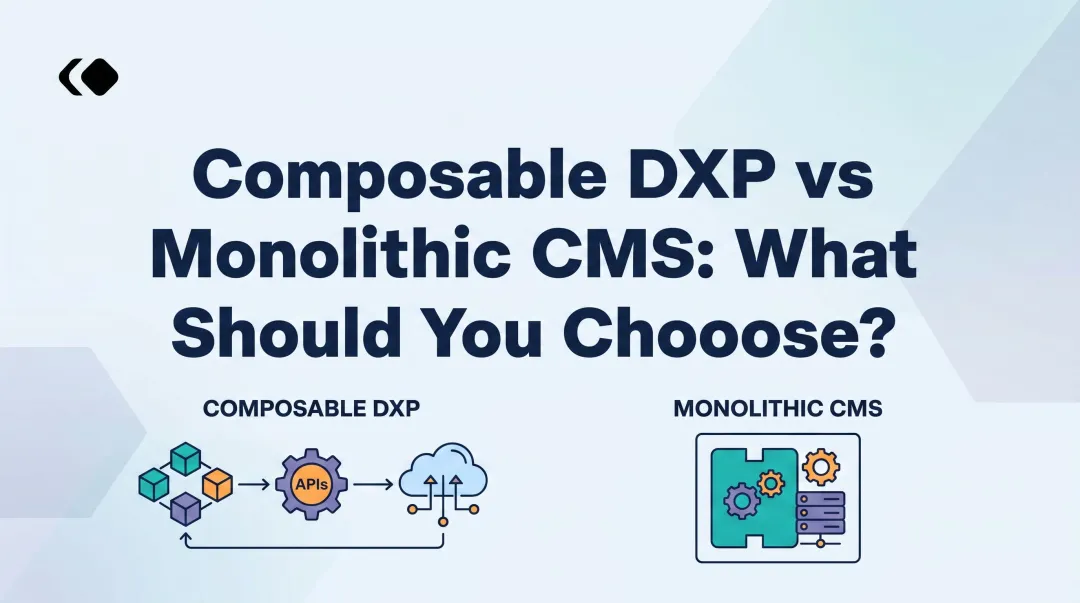
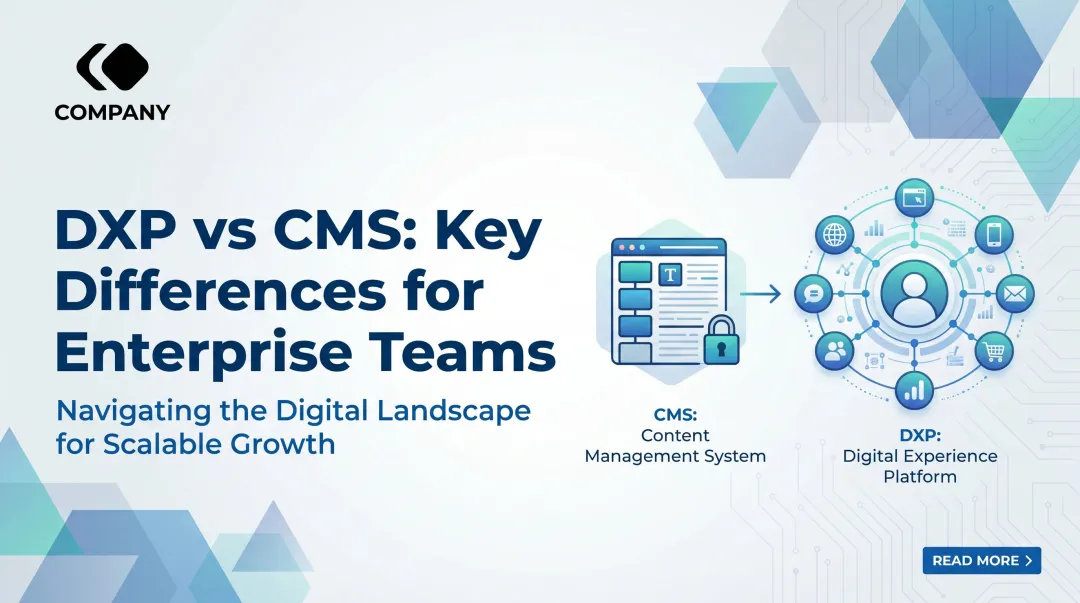
A CMS manages content for a single website, while a DXP is a broader integrated platform covering content management, analytics, personalisation, multi-channel delivery, and AI tools. DXPs are designed to manage the entire customer experience across all digital touchpoints,web, mobile, push, social,not just one site.
What does an open DXP mean, and why does it matter?
An open DXP integrates best-of-breed tools from multiple vendors via open APIs, while a closed DXP bundles all components from a single provider. Open DXPs offer more flexibility to swap components and avoid vendor lock-in, which matters for organisations whose needs evolve quickly or require specialised tools.
How much does a digital experience platform typically cost?
DXP pricing varies widely based on licensing model (subscription, SaaS, usage-based), implementation scope, and integration complexity. Total cost of ownership,including implementation, ongoing maintenance, and developer dependency,often far exceeds the initial licence fee. TCO, not the platform fee alone, should drive your cost comparison.
How do I know if my organisation is ready to implement a DXP?
Readiness depends on stakeholder alignment, existing content and data governance, and team capacity. Organisations with fragmented tool stacks, slow publishing workflows, or poor cross-channel consistency are typically the strongest candidates for consolidation.
What role does AI play in a modern DXP?
AI in a modern DXP accelerates content creation, automates social and push distribution, powers personalisation at scale, and supports GEO and AI search discoverability. Native AI capabilities,built into the platform rather than added via third-party tools,offer tighter integration and better performance.
How long does it take to implement a DXP?
Timelines range from a few weeks for focused SaaS deployments to several months for enterprises migrating legacy systems, depending on migration complexity and integration scope. Phased rollouts with clear milestones help demonstrate value faster and reduce risk.